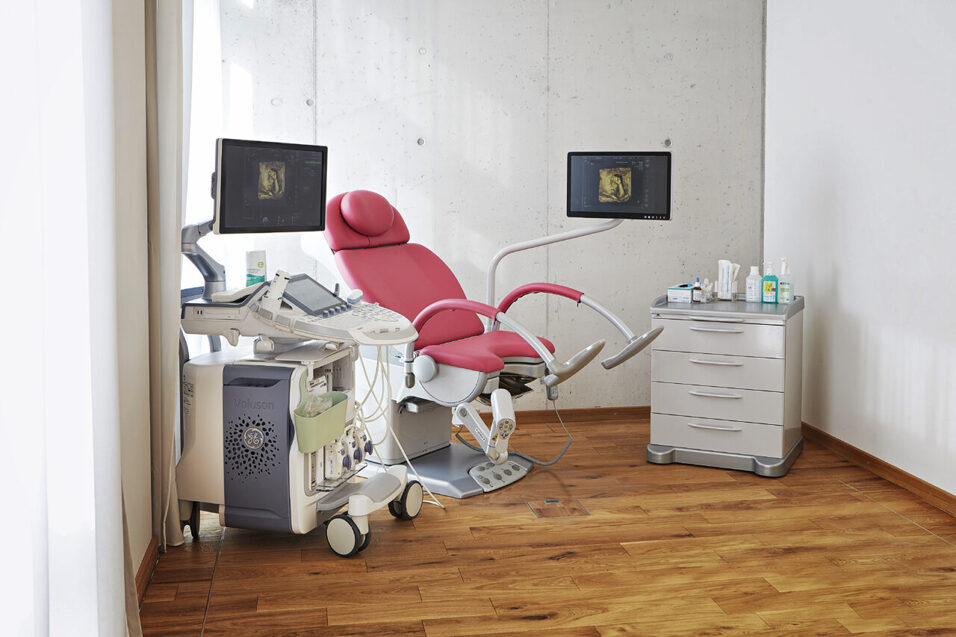
If the pregnancy has worked out, many pregnant women are often plagued by worrying symptoms - combined with worries or even fears of a premature birth. Our experience is that a tug in the belly can cause great uncertainty. Today, conventional pregnancy tests can only vaguely determine how great the risk of a premature birth actually is. That is why we now have the Pregnolia system, which allows us to estimate this risk.

© Pregnolia
In the course of pregnancy, the cervix becomes shorter and softer. This is the prerequisite for a natural birth. Thus, the length and stiffness of the cervix give an indication of how soon a birth is imminent or whether there is a risk of premature birth.

© Pregnolia
NEW: Cervical stiffness measurement
While the length of the cervix can be easily determined in an ultrasound image, it has not been possible to measure cervical stiffness objectively in comparable figures until now. So far cervical stiffness has been manually palpated and subjectively assessed by so-called palpation. However, initial studies by Pregnolia showed that softening begins before shortening. This makes cervical stiffness an important indicator for quickly assessing a possible premature birth and, if necessary, initiating appropriate medical measures.
The measurement with the Pregnolia System is quick and uncomplicated. CSS, Helsana and Sanitas cover the new screening examination through their supplementary insurances. For all self-paying women, the examination costs CHF 150.
Flyer Pregnolia
Video Pregnolia measurement and first experiences